
Short answer: YAG laser capsulotomy is usually done once a cloudy capsule is affecting your sight, and normally no sooner than about three months after cataract surgery. The clouding most often appears around two years after the operation, but it can start earlier or many years later. There is no deadline, so YAG can be done whenever it is needed.
If your sight was clear after cataract surgery and has slowly become hazy again, the usual cause is posterior capsule opacification, often called a “second cataract”. It is not the cataract coming back, and it is treated with a short laser procedure in clinic. This guide explains when YAG laser is done, what happens on the day, how quickly vision improves and what the risks are.
What is posterior capsule opacification?
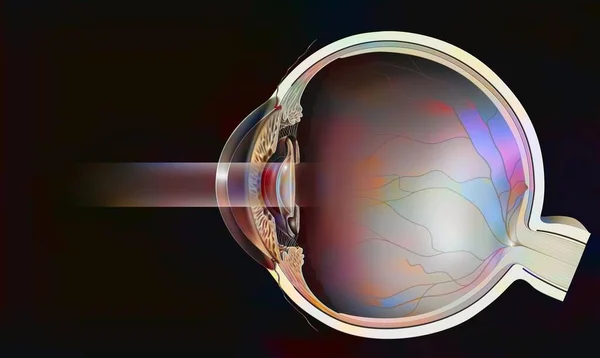
During cataract surgery the cloudy natural lens is removed, but the thin, clear bag that held it, the capsule, is left in place to support your new lens implant. Over time, cells left on the back of that capsule can grow and thicken it. Light then scatters as it passes through, and your vision becomes cloudy again.
Moorfields Eye Hospital reports that this happens in around 10 to 20% of patients at some point after surgery. It does not damage the eye, and eye drops or new glasses will not clear it.
Signs the capsule may be clouding
- Sight that has gradually become hazy or misty since your cataract operation
- Glare from sunlight or oncoming headlights
- Halos around lights at night
- Colours looking washed out, or print looking grey rather than black
- Blur that a new glasses prescription does not fix
These symptoms can have other causes, such as dry eye or a problem with the retina, so the capsule needs to be checked by an eye doctor before treatment.
How soon after cataract surgery can YAG laser be done?
Most surgeons wait at least three months after cataract surgery. That gives the eye time to recover, lets the lens implant settle in the capsule and makes it easier to judge whether the haze is really coming from the capsule. In practice, most people who need YAG have it much later, because clouding usually builds up over a year or more.
| Time since cataract surgery | What usually happens |
|---|---|
| First 4 weeks | The eye is healing and you use drops. Haze at this stage is normally from healing, not the capsule. YAG is very rarely needed. |
| 1 to 3 months | Your sight settles and your optometrist can check your glasses. If vision has not cleared as expected, your surgeon looks for the cause. |
| 3 months onwards | If the capsule has clouded and it affects daily life, YAG can be offered. |
| Around 2 years | The most common time for clouding to become noticeable. |
| Years later | YAG works just as well. There is no time limit. |
Occasionally a surgeon treats earlier than three months for a specific reason found at examination. That decision depends on what is seen in your eye, so ask your surgeon to explain it if early treatment is suggested.
How is the decision made?
At your appointment your vision and eye pressure are checked, the pupil is widened with drops and the capsule, lens implant and retina are examined. YAG is recommended when the capsule is visibly cloudy and that cloudiness explains the change in your sight. If the main cause is something else, such as dry eye or macular changes, YAG would not help and you will be told what will.
What happens during YAG laser capsulotomy?
- Drops. Your pupil is widened with drops, which can take up to 30 minutes to work. Numbing drops are also used.
- Positioning. You sit at a laser that looks like the microscope used in clinic. A contact lens may be placed on the eye to keep it steady.
- The laser. The laser makes a small opening in the cloudy capsule behind your implant. You see a bright light and hear a clicking sound with each pulse. It is not painful.
- After the laser. Your eye pressure may be checked before you leave, and you may be given drops to use for a few days.
The laser itself takes about 5 to 10 minutes. With the checks and the time for drops to work, expect to be at the hospital for up to two hours. There are no cuts or stitches.
How long after YAG does vision improve?
Many people notice clearer sight within a few hours, once the dilating drops wear off. It can take several days for vision to reach its best. You may see a few new floaters, small dots or threads that drift across your view; these usually become less noticeable over the following weeks.
- Driving: do not drive home. Your pupil stays wide and vision may be blurred for a few hours, so arrange a lift.
- Daily activities: because there are no incisions, most people return to normal activities straight away.
- Glasses: your prescription rarely changes much, but have an eye test if things still do not feel right after a few weeks.
Is YAG laser capsulotomy safe?
YAG laser is a very common procedure and serious problems are rare. The risks to know about are:
| Effect | How common | What it means |
|---|---|---|
| Floaters | Common | Small specks from the opened capsule. They usually fade over weeks. |
| Short rise in eye pressure | Common | Often checked before you go home and treated with drops if needed. |
| Mild soreness | Occasional | Usually from the contact lens. It settles within a day. |
| Inflammation | Uncommon | Redness or light sensitivity, treated with anti-inflammatory drops. |
| Small marks on the lens implant | Occasional | Very rarely affect vision. |
| Retinal detachment | Rare | Can occur days to months later. The risk is higher if you are very short-sighted or have had retinal problems before. |
Seek urgent advice if you notice a sudden shower of new floaters, flashing lights, a shadow or curtain across part of your vision, worsening sight, or pain and redness not eased by normal painkillers.
How many times can you have YAG laser?
Usually only once in each eye. The opening in the capsule does not normally close, so the clouding does not come back in the same place. If your other eye has had cataract surgery too, its capsule may cloud at a different time, or not at all.
YAG laser capsulotomy with Mr Gangwani
Mr Vinod Gangwani is a consultant ophthalmic surgeon and NHS clinical lead for cataract microsurgery at Ashford and St Peter’s Hospitals. He assesses and treats posterior capsule opacification at his six hospitals and clinics across Surrey and West London, whether or not he carried out your original cataract surgery.
- YAG laser: £650 for one eye, or about £1,200 for both
- Initial consultation: £250
- If you are insured, check your policy covers YAG laser and get an authorisation number first. See medical insurance.
New patients are usually seen within two weeks. Book a consultation or call 07307 267033. For background on the original operation, see cataract surgery and lens implant options.
YAG laser: frequently asked questions
How soon after cataract surgery can YAG laser be done?
Usually no sooner than about three months, and only once a cloudy capsule is affecting your vision. Most people who need it have it a year or more after surgery.
How long after YAG laser does vision improve?
Often within hours, once the dilating drops wear off. It can take several days to reach its best.
Is YAG laser capsulotomy painful?
No. Numbing drops are used, and most people feel nothing more than the contact lens touching the eye. You see a bright light and hear clicks.
Can I drive after YAG laser?
Not straight away. Arrange a lift home, because your pupil will be widened and vision blurred for a few hours. You can drive once your sight is clear and meets the DVLA standard.
Can the cloudiness come back after YAG?
Not normally in the same eye, because the opening made by the laser stays open. Most people need YAG only once per eye.
Reviewed by Mr Vinod Gangwani, FRCS, MRCOphth, consultant ophthalmic surgeon. Sources include Moorfields Eye Hospital patient information on YAG laser for posterior capsule opacification. This article is general information and does not replace an examination.