Call Maxine, Mr Gangwani’s private secretary: 07307 267033 · Monday to Friday, 9am to 5pm

About

Mr Vinod Gangwani

Consultant Ophthalmic Surgeon, FRCS, MRCOphth

A specialist in cataract surgery, premium lens implants and corneal disease, Mr Gangwani is a consultant at Ashford and St Peter’s NHS Foundation Trust, where he is clinical lead for cataract microsurgery. He has performed more than 9,000 cataract operations and sees private patients at six hospitals and clinics across Surrey and London.
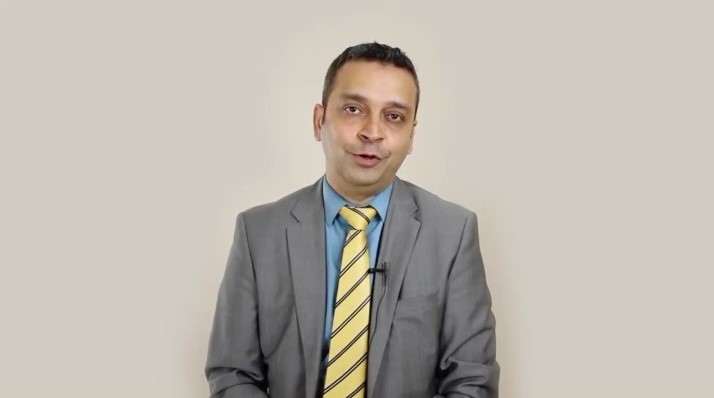
Vinod Gangwani Video Thumbnail

GMC number

6026332

Specialist Register

Ophthalmology

Qualifications

FRCS, MRCOphth

NHS post

Ashford and St Peter’s

Languages

English, Hindi

Training and career

From Moorfields to Surrey

Two fellowships at the UK’s leading eye hospital, a consultant post in central London, then a move to Surrey to lead cataract services.

Fellowship

Cataract and refractive lens surgery, Moorfields Eye Hospital

Training in cataract and refractive lens surgery, including clinical trials and research on the premium lenses used in cataract and refractive lens surgery.

Fellowship

Cornea, Moorfields Eye Hospital and King's College Hospital

Treating complex corneal problems and performing lamellar corneal transplants, including DMEK, DSEK and DALK.

Consultant

King's College Hospital, London

Consultant Ophthalmic Surgeon for 15 months before moving to Surrey.

Consultant, now

Ashford and St Peter's NHS Foundation Trust

Consultant Ophthalmic Surgeon and clinical lead for cataract microsurgery.

Areas of interest

What he treats most

Memberships

Professional bodies

Research

14 peer-reviewed papers

Mostly on the questions patients ask him in clinic: which lens, how stable it is, and how to correct astigmatism.

  • 2021 Restarting cataract surgery during the COVID-19 pandemic: a prospective study analysing 30-day outcomes after elective cataract surgery in the United Kingdom. BMC Ophthalmology.
  • 2021 Clinical safety and efficacy of a preloaded monofocal hydrophobic acrylic intraocular lens in a real-world population. BMC Ophthalmology.
  • 2020 Refractive surprise after cataract surgery secondary to smeared optics of swept-source optical coherence tomography biometer: a case report. BMC Ophthalmology.
  • 2014 Multifocal toric intraocular lenses versus multifocal intraocular lenses combined with peripheral corneal relaxing incisions to correct moderate astigmatism. Journal of Cataract and Refractive Surgery.
  • 2014 Comparison of methods to quantify posterior capsule opacification using forward and backward light scattering. Journal of Cataract and Refractive Surgery.
  • 2014 Correction of moderate corneal astigmatism during cataract surgery: toric intraocular lens versus peripheral corneal relaxing incisions. Journal of Cataract and Refractive Surgery.
  • 2013 Capsular bag stability and posterior capsule opacification of a plate-haptic design microincision cataract surgery intraocular lens: 3-year results of a randomised trial. British Journal of Ophthalmology.
  • 2012 Effect of fluorescein dye staining of the tear film on Scheimpflug measurements of central corneal thickness. Cornea.
  • 2011 A prospective study comparing EndoGlide and Busin glide insertion techniques in Descemet stripping endothelial keratoplasty. American Journal of Ophthalmology.
  • 2011 Posterior capsule opacification and capsular bag performance of a microincisional intraocular lens. Journal of Cataract and Refractive Surgery.
  • 2011 Impact of intraocular lens haptic design and orientation on decentration and tilt. Journal of Cataract and Refractive Surgery.
  • 2010 Rotational stability of a single-piece toric acrylic intraocular lens. Journal of Cataract and Refractive Surgery.
  • 2010 Reproducibility of intraocular lens decentration and tilt measurement using a clinical Purkinje meter. Journal of Cataract and Refractive Surgery.
  • 2007 Langerhans cell histiocytosis of the optic chiasm: a clinicopathological case report. Clinical and Experimental Ophthalmology.

Meet Mr Gangwani in clinic

Initial consultation £250, at the hospital or clinic nearest to you. Usually within two weeks.