Have you ever woken up with sore, gritty eyes, or perhaps noticed your eyelids looking a bit swollen with crusty flakes around your lashes? If so, you may be dealing with blepharitis, a common yet often overlooked condition that causes inflammation along the edges of the eyelids. Though it’s usually not serious, it can be uncomfortable and requires ongoing care to manage. In this blog, we’ll walk you through what blepharitis is, its causes, symptoms, and, most importantly, how you can treat and manage it to keep your eyes feeling fresh and healthy.
What is Blepharitis?
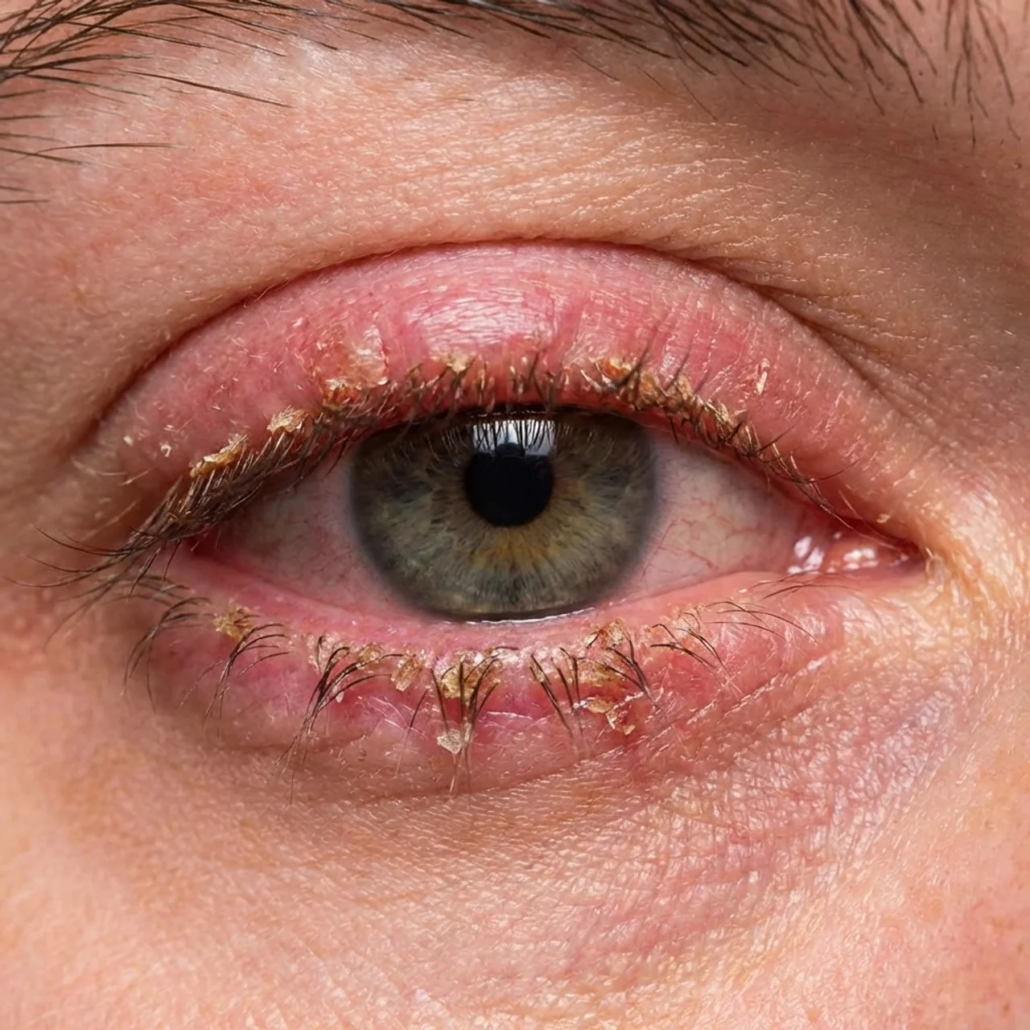
Blepharitis is an inflammation of the eyelid edges, causing them to become red, swollen, and sore. It can make your eyes feel itchy, irritated, and gritty, almost as if there’s something stuck in them. The condition is quite common and typically affects both eyes, particularly along the areas where the eyelashes grow.
Although blepharitis isn’t a serious condition and doesn’t typically affect vision, it can be uncomfortable and persistent, often coming and going over time. While there is no permanent cure, most people can effectively manage it with regular eyelid care and hygiene.
What Causes Blepharitis?
Blepharitis isn’t contagious, so you don’t need to worry about passing it on to others. Instead, it develops when the tiny oil glands at the base of your eyelashes become blocked or irritated, which can cause bacteria to build up. Some of the most common causes include:
- Blocked oil glands (Meibomian gland dysfunction): These glands help keep your tears from drying out too quickly. When blocked, they can cause irritation and inflammation.
- Skin conditions: Conditions like dandruff (seborrhoeic dermatitis) or rosacea (a skin condition causing redness and spots) are strongly linked to blepharitis.
- Bacterial overgrowth: The normal bacteria on your skin can sometimes grow out of control, leading to redness and crusting along the eyelid.
- Tiny mites (Demodex): These microscopic mites that naturally live around your eyelashes can sometimes exacerbate irritation.
- Allergic reactions: Eye makeup, contact lens solutions, or eye drops can occasionally trigger inflammation.
Who Is at Risk for Blepharitis?
While anyone can get blepharitis, you may be more likely to develop it if you:
- Are an adult, especially if you’re over 50.
- Have oily skin or suffer from dandruff.
- Experience rosacea or other skin conditions.
- Wear contact lenses, particularly if you don’t maintain proper hygiene.
- Use eye makeup and sometimes struggle to remove it thoroughly.
What Are the Symptoms of Blepharitis?
Symptoms can vary from mild to severe, and they tend to be worse in the morning. Common signs of blepharitis include:
- Itchy or sore eyelids: The edges of your eyelids may feel hot or irritated.
- Gritty sensation: You may feel as if there’s sand in your eyes.
- Red, swollen eyelid edges: The skin around your eyes becomes inflamed.
- Crusts or flakes: Especially around the base of your eyelashes.
- Sticky eyelids: Your eyelids might stick together, particularly upon waking.
- Sensitivity to light: Bright light can cause discomfort.
- Mild blurred vision: This is usually temporary and clears after blinking.
How Is Blepharitis Diagnosed?
Diagnosing blepharitis typically involves a simple eye exam. An optician or GP will:
- Examine your eyelids and eyelashes to check for swelling or crusting.
- Ask about your symptoms and whether you have any underlying skin conditions like rosacea or dandruff.
- Perform a tear test: Since blepharitis is often linked to dry eyes, your tear quality may be checked.
- In more severe cases, a swab of the eye discharge might be taken to check for infection or other underlying causes.
How Is Blepharitis Treated?
Treatment for blepharitis mainly revolves around eyelid hygiene. Here’s the good news: while blepharitis is often a long-term condition, it’s manageable with regular care.
The Three-Step Eyelid Cleaning Routine
You should aim to clean your eyelids once or twice a day:
- Warm compress: Soak a clean flannel in warm (not hot) water and place it over your closed eyelids for 5-10 minutes. This helps soften any crusts and loosens oils in the glands.
- Gentle massage: Gently massage your eyelids to release trapped oils. For the upper lids, massage downward toward your lashes; for the lower lids, massage upwards.
- Lid cleaning: Clean the edges of your eyelids with either:
- A clean cotton bud or pharmacy eyelid wipe,
- Or warm water with a tiny drop of baby shampoo, if advised.
Medical Treatments
If cleaning alone isn’t enough, your doctor might recommend:
- Artificial tears to relieve dryness.
- Antibiotic ointments or drops for bacterial infections.
- Oral antibiotics for more severe cases or rosacea-related blepharitis.
- Steroid drops, but only for short-term use under specialist supervision.
How Can Blepharitis Be Managed Day-to-Day?
While regular eyelid care is essential, here are a few extra steps to help prevent flare-ups:
- Avoid eye makeup during flare-ups, and replace your makeup every three months to prevent bacterial buildup.
- Take breaks from contact lenses if your eyes are sore.
- Treat dandruff if present, as it can worsen symptoms.
- Use a humidifier in dry environments to keep your eyes hydrated.
- Consider adding omega-3 fatty acids (from food or supplements) to your diet, if recommended by your doctor.
Possible Complications of Blepharitis
While blepharitis is rarely dangerous, poor management can lead to complications, including:
- Styes: Painful lumps caused by blocked oil glands.
- Chalazion: Painless blocked oil glands.
- Dry eye syndrome: Because blepharitis often disrupts tear production.
- Conjunctivitis: An infection of the conjunctiva.
- Corneal problems: In rare cases, untreated blepharitis can lead to serious issues with the cornea.
What’s the Outlook for Blepharitis?
The good news is that most people can manage their blepharitis symptoms effectively with regular eyelid care. While flare-ups can occur, especially during times of stress, illness, or cold weather, the condition doesn’t usually affect eyesight. With daily care, you can keep symptoms mild and under control.
When Should You Seek Medical Help?
If your symptoms don’t improve after two weeks of daily cleaning or if they get worse, it’s time to seek medical advice. You should also consult a healthcare professional if:
- Your vision becomes blurry or painful.
- Your eyelid shape changes.
- You experience sudden vision loss.
- Redness spreads beyond the eyelids or if you notice flashes of light or new floaters in your vision.
FAQs
1. Can blepharitis be cured permanently?
No, but with regular eyelid cleaning, you can control symptoms and prevent flare-ups.
2. Is blepharitis caused by poor hygiene?
No, it’s linked to blocked oil glands and skin conditions, not general cleanliness.
3. Can I wear eye makeup?
Yes, but only after symptoms settle. Avoid applying makeup to the inner eyelid edge and always remove it thoroughly.
4. Does blepharitis affect vision long-term?
Not usually. Vision changes are typically temporary and clear up after cleaning and treatment.
5. Can children get blepharitis?
Yes, though it’s more common in adults.
6. Will antibiotics always help?
No, antibiotics are only helpful if there’s an infection present.
7. Is blepharitis linked to dry eyes?
Yes. The two conditions often occur together.
Blepharitis might seem like a nuisance, but with consistent eyelid hygiene and the right treatments, you can easily manage this condition. It may require ongoing care, but most people find they can control their symptoms and prevent flare-ups with a simple daily routine. If you’re struggling with sore, red eyes, be sure to see a professional for proper diagnosis and care. Keep those eyelids clean and stay on top of it!
Have you been dealing with blepharitis? Drop a comment below or share your experiences! If you’ve got any questions about managing symptoms, we’re here to help.