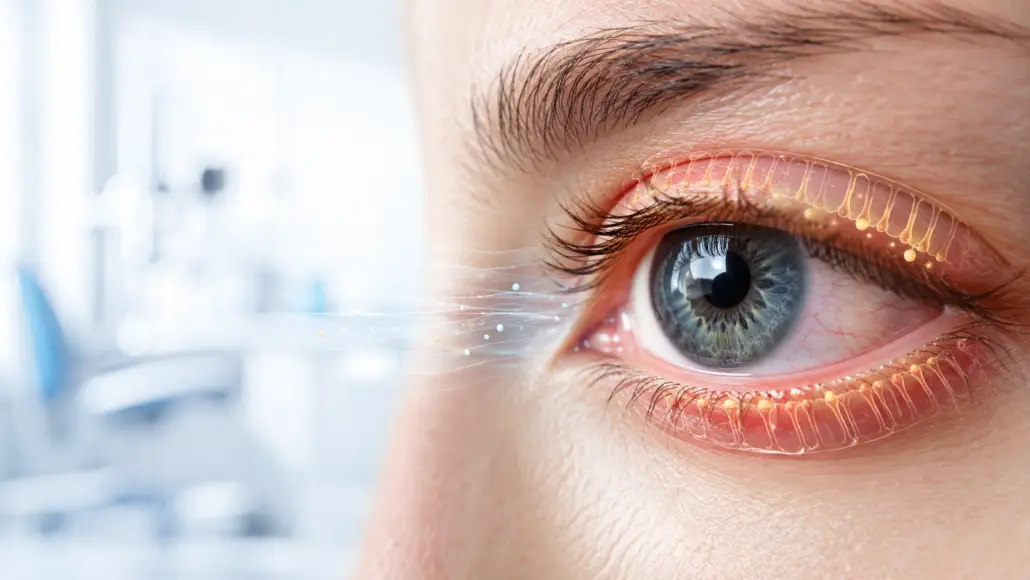
Meibomian gland dysfunction, often called MGD, is one of the most common causes of dry eye symptoms. It happens when the tiny oil producing glands in the eyelids become blocked, inflamed or unable to produce healthy oil. Without this oil, the tear film becomes unstable and tears evaporate too quickly from the eye surface.
The result can be dry, gritty, burning, watery or intermittently blurry eyes. Many people describe the feeling as if there is sand, dust or a foreign body in the eye. Others notice that their vision clears after blinking, then becomes blurred again a few moments later.
What Is Meibomian Gland Dysfunction?
The meibomian glands are small oil secreting glands located along the upper and lower eyelids. Their job is to release oils into the tear film. This oily layer sits on top of the watery layer of the tears and helps stop the tears from evaporating too quickly.
When these glands are healthy, they release clear, smooth oil every time you blink. This helps keep the eyes comfortable and the vision clear. When the glands become blocked or produce thick, poor quality oil, the tear film loses stability. This leads to evaporative dry eye disease.
Meibomian gland dysfunction is usually chronic. This means it often needs ongoing management rather than a one off cure. The good news is that many patients can achieve significant improvement when the condition is diagnosed properly and treated consistently.
Why Are Meibomian Glands Important?
A healthy tear film is essential for comfortable eyes and clear vision. It lubricates the eye surface, protects the cornea and helps light enter the eye smoothly.
The oil from the meibomian glands acts like a protective seal. If the oil layer is weak, missing or poor quality, the watery part of the tears evaporates too quickly. This leaves the surface of the eye exposed, irritated and inflamed.
This is why MGD can cause symptoms that feel like classic dry eye, even when the eye is still producing watery tears. In fact, some patients with MGD have watery eyes because the eye tries to compensate for irritation by producing reflex tears. These reflex tears may water the eye, but they do not always provide stable lubrication.
What Causes Meibomian Gland Dysfunction?
The most common cause is obstructive meibomian gland dysfunction. This happens when the gland openings become blocked. The oil inside the glands can become thick, stagnant or difficult to express. Over time, the glands may become less effective and, in more advanced cases, some glands can become damaged.
Several factors can contribute to this process. Age is a major risk factor, as meibomian gland function often declines over time. Long periods of screen use can also worsen MGD because people blink less often when concentrating. Incomplete blinking means the oil glands are not stimulated properly, allowing the oil to stagnate.
Blepharitis, which is inflammation around the eyelid margins, is another common trigger. Bacterial overgrowth, eyelid debris, crusting and irritation can all affect the gland openings. In some patients, Demodex mites may also contribute to eyelid inflammation and blocked glands.
Skin conditions such as rosacea and psoriasis can increase the risk of meibomian gland dysfunction. Hormonal changes, contact lens wear, dry environments, air conditioning, certain medications and underlying inflammatory conditions may also play a role.
Symptoms of Meibomian Gland Dysfunction
MGD symptoms can vary, especially in the early stages. Some people have gland changes before they notice clear symptoms. Others experience daily discomfort that affects reading, driving, computer work or contact lens wear.
Common symptoms include chronic dryness, burning, itching, redness and a gritty sensation. The eyes may feel tired or sore, particularly after screen use or at the end of the day. Some people notice watery eyes, which can happen when the eye surface becomes irritated and triggers reflex tearing.
Blurred vision that comes and goes is also common. This happens because the tear film becomes unstable. Vision may improve briefly after blinking, then blur again as the tear film breaks down.
Patients may also notice sticky, crusty or uncomfortable eyelids, especially in the morning. Light sensitivity and a feeling of heaviness around the eyelids may also occur.
Why MGD Can Make Vision Fluctuate
The tear film is the first optical surface of the eye. Before light reaches the cornea and lens, it must pass through the tear film. If the tear film is unstable because the oil layer is poor, the quality of vision can fluctuate.
This is why patients with MGD may feel that their glasses prescription is inconsistent. They may see well for a few seconds after blinking, then notice blur, glare or ghosting. These symptoms can be more noticeable when reading, using a computer, driving at night or spending time in dry indoor environments.
For patients considering cataract surgery or refractive lens based surgery, this matters. Accurate measurements depend on a stable eye surface. If meibomian gland dysfunction is present, it may need to be treated before surgical planning to support better comfort and more reliable visual measurements.
Is Meibomian Gland Dysfunction the Same as Dry Eye?
MGD is not exactly the same as dry eye, but it is one of the leading causes of evaporative dry eye.
Dry eye disease can happen when the eyes do not produce enough watery tears, or when tears evaporate too quickly. MGD mainly causes the second problem. The eyes may have watery tears, but the oil layer is not working properly, so the tears do not stay on the eye surface for long enough.
This is why MGD treatment often focuses on improving eyelid gland function, not just adding more artificial tears. Lubricating eye drops may help symptoms, but they may not fully address blocked or unhealthy oil glands.
Can Meibomian Gland Dysfunction Be Cured?
Meibomian gland dysfunction is usually managed rather than permanently cured. This is because it is often a chronic condition linked with gland blockage, inflammation, age related changes, eyelid health, skin conditions, hormones and lifestyle factors.
That does not mean patients have to live with constant discomfort. With the right treatment plan, many people can improve oil flow, reduce inflammation, stabilise the tear film and achieve long term symptom control.
The key is consistency. MGD tends to return if eyelid care is stopped too early or if the underlying triggers are not addressed. More advanced cases may need specialist treatment to clear blocked glands and protect remaining gland function.
How Long Does MGD Take to Improve?
The time it takes to improve depends on the severity of the condition and how long it has been present.
Mild cases may improve within a few weeks with consistent warm compresses, eyelid hygiene and appropriate lubricating drops. Moderate or severe cases may take longer and may require prescription treatment or in clinic procedures.
If symptoms have been present for months or years, the glands may be more blocked and the inflammation may be more established. In these cases, improvement is still possible, but it usually needs a more structured and sustained plan.
How Is Meibomian Gland Dysfunction Diagnosed?
A proper diagnosis requires an eye examination. Symptoms alone are not enough, because other eye conditions can produce similar discomfort.
An ophthalmologist may examine the eyelid margins, lashes, tear film and corneal surface using a slit lamp microscope. The glands may be assessed to see whether they release healthy oil, thickened oil or very little secretion. The tear film may also be checked to see how quickly it breaks up after blinking.
The aim is to understand the severity of the gland dysfunction, whether blepharitis or inflammation is present, and whether the eye surface has been affected. This allows treatment to be matched to the patient rather than relying on generic dry eye advice.
At Home Care for Meibomian Gland Dysfunction
At home care can be helpful, especially in mild or early MGD. However, it must be done correctly and consistently.
Warm compresses are often used to soften thickened oils inside the glands. The warmth should be applied to closed eyelids for around 10 minutes, using a safe and appropriate eye compress. The aim is gentle heat, not excessive heat. After warming, gentle eyelid massage may help encourage oil flow towards the lash line.
Eyelid hygiene can also help, particularly if there is crusting, blepharitis or debris around the lashes. Specialist eyelid wipes or cleansers are often preferable to harsh products. The eyelids should be cleaned carefully, without scrubbing the eye surface.
Screen habits are also important. Taking regular breaks, blinking fully and avoiding long periods of staring can help reduce stagnation in the glands. Patients who work on screens for many hours may benefit from conscious blinking and regular rest periods.
Environmental changes can also reduce symptoms. Avoiding direct airflow from fans, car vents and air conditioning can help. Increasing humidity in dry indoor spaces may also support the tear film.
Eye Drops and Lubricants for MGD
Lubricating eye drops can relieve discomfort, but the choice of drops matters. In MGD, lipid containing lubricants may be considered because they are designed to support the oily layer of the tear film.
Preservative free drops are often preferred when drops are needed frequently. Eye gels or ointments may be useful at night, although they can blur the vision temporarily.
Artificial tears can help symptoms, but they do not unblock the meibomian glands. If drops are needed repeatedly and symptoms still return, a specialist assessment is sensible.
Omega 3 and Nutrition
Omega 3 fatty acids may help some patients with meibomian gland dysfunction by supporting the quality of the oils produced by the glands and helping with inflammation. However, supplements do not work for everyone and they should not be presented as a guaranteed treatment.
Patients should seek medical advice before starting supplements if they take blood thinning medication, have liver disease, are pregnant, have allergies to fish products or already take several supplements.
A balanced diet, good hydration and general health management can support eye health, but persistent MGD usually requires targeted eyelid and ocular surface care.
Professional Treatments for Meibomian Gland Dysfunction
If home care is not enough, professional treatment may be needed.
Meibomian gland expression involves clearing stagnant or thickened oils from the glands. This should be performed by a trained eye care professional because incorrect pressure or technique can irritate the eye or eyelids.
Thermal pulsation treatments use controlled heat and gentle pressure to improve gland clearance. These treatments are designed to warm the glands and help release blocked oil more effectively than simple home compresses in selected cases.
Intense pulsed light therapy, often called IPL, may be used in some patients, particularly where inflammation, rosacea or eyelid margin disease contributes to MGD. IPL is intended to reduce inflammation around the eyelids and support healthier gland function.
Lid debridement or specialist eyelid cleaning may also be considered if there is significant debris, crusting or bacterial build up around the lid margins. In some cases, prescription eye drops, short courses of anti inflammatory treatment or antibiotics may be recommended depending on the clinical findings.
Treatment should always be personalised. MGD can look similar from patient to patient, but the underlying pattern and severity can be different.
Specialist Assessment With Mr Vinod Gangwani

Meibomian gland dysfunction can be frustrating because symptoms often return when the underlying gland problem is not treated. A specialist assessment can help identify whether the problem is gland blockage, inflammation, blepharitis, ocular surface disease or a combination of factors.
Mr Vinod Gangwani is a Consultant Ophthalmic Surgeon and corneal specialist with more than 20 years of experience in ophthalmology. His expertise includes cataract surgery, corneal disease, ocular surface disorders and refractive lens based surgery. In 2025, he was recognised with the European Award in Medicine in the Ophthalmology category, reflecting his contribution and standing within the field.
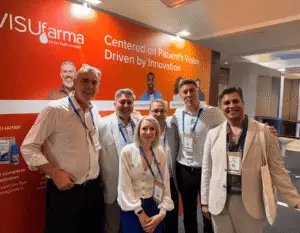
Mr Gangwani has also participated in the European Dry Eye Society Congress, with EuDEC 2026 taking place in Milan, Italy. The congress brings together international eye care professionals focused on dry eye and ocular surface disease, helping specialists stay connected with current thinking, research and clinical approaches in this important area of eye health.
If your eyes feel dry, gritty, watery, sore, sticky or intermittently blurry, book a specialist consultation with Mr Vinod Gangwani to understand whether meibomian gland dysfunction is contributing to your symptoms.
When Should You See an Eye Doctor?
You should seek professional advice if symptoms continue despite warm compresses and eyelid care, if your vision is affected, if symptoms are worsening, or if you have persistent redness, pain or light sensitivity.
You should seek urgent advice if you have sudden vision loss, severe eye pain, a painful red eye, an eye injury or a red eye while wearing contact lenses.
MGD can be progressive. If blocked glands are ignored for too long, gland function may become harder to recover. Early diagnosis and consistent treatment can help protect the tear film and reduce long term discomfort.
Meibomian Gland Dysfunction and Cataract Surgery
MGD is especially important before cataract surgery, refractive lens exchange or premium lens implant planning. A poor tear film can affect the accuracy of measurements and may contribute to visual fluctuation after surgery.
Mr Gangwani’s experience in cataract surgery, corneal disease and refractive lens based surgery means he understands how the ocular surface can influence comfort, clarity and surgical planning. Managing MGD before surgery may help improve the quality of assessment and support better outcomes.
Book a Meibomian Gland Dysfunction Consultation
Meibomian gland dysfunction should not be ignored if symptoms are persistent, worsening or affecting your vision. Although MGD is usually a chronic condition, it is highly manageable with the right diagnosis, daily care and professional treatment where needed.
Book a consultation with Mr Vinod Gangwani today and take the first step towards clearer, more comfortable vision.
FAQs About Meibomian Gland Dysfunction
What is meibomian gland dysfunction?
Meibomian gland dysfunction is a condition where the oil producing glands in the eyelids become blocked or produce poor quality oil. This weakens the tear film and can cause evaporative dry eye.
What are the symptoms of MGD?
Symptoms can include dry eyes, burning, itching, redness, watery eyes, gritty sensation, sticky eyelids, light sensitivity and blurry vision that comes and goes.
Can MGD cause watery eyes?
Yes. MGD can cause watery eyes because irritation from an unstable tear film can trigger reflex tearing. These watery tears do not always lubricate the eye properly.
Can meibomian gland dysfunction be cured?
MGD is usually managed rather than permanently cured. With consistent treatment, many patients can improve symptoms, support oil flow and reduce flare ups.
How long does MGD take to improve?
Mild cases may improve within a few weeks with consistent care. More established or severe MGD can take longer and may need professional treatment.
What triggers MGD?
Common triggers include ageing, reduced blinking during screen use, blepharitis, rosacea, contact lens wear, hormonal change, dry environments and certain medications.
Are warm compresses enough for MGD?
Warm compresses may help mild cases, but they are not always enough. If symptoms persist, the glands may need specialist assessment and more targeted treatment.
Can MGD affect cataract surgery?
Yes. MGD can affect the tear film, which may influence pre surgery measurements and visual quality. It is sensible to assess and manage MGD before cataract surgery or refractive lens based surgery.
Should I see an ophthalmologist for MGD?
You should consider seeing an ophthalmologist if symptoms are persistent, vision is affected, the eye is painful or red, or you are planning cataract or lens based surgery.